

06
Pressure and Level Indicators
Pressure and level indicators are used to monitor storage and process conditions in silos, bins, bunkers and other vessels containing powders or granular materials. Level devices indicate whether material has reached defined points or provide continuous measurement, while pressure-monitoring equipment helps detect pressure conditions during filling and discharge operations.
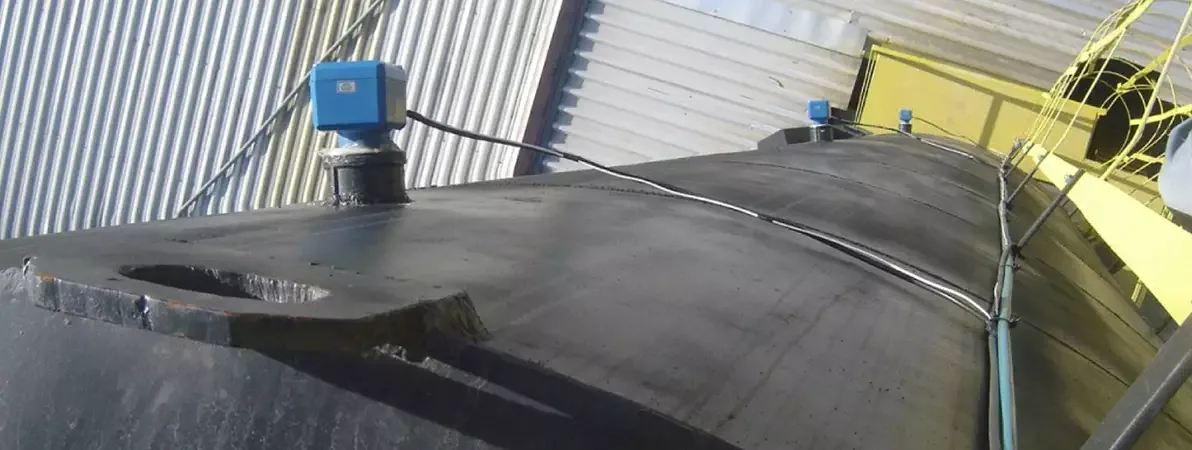
Gallery
Point level, continuous level, pressure switching and silo safety devices.
Technical overview
By providing reliable information about material level and pressure, these devices can be integrated into bulk-material handling systems to support process control and safer operation.
What are Pressure and Level Indicators? What do they do?
Pressure and level indicators perform different monitoring functions within storage and handling systems.
Pressure-monitoring devices are used to detect pressure conditions inside tanks, silos or similar vessels, particularly during pneumatic filling and emptying operations. In diaphragm-based devices, changes in pressure act on the sensing element and trigger an electrical switching signal when the preset operating point is reached.
Level indicators are used to determine the presence or quantity of material inside silos, warehouses, bins and bunkers. Different measurement principles are used according to the application.
ILT silo level indicators use a rotary flag or paddle mechanism for minimum or maximum level detection. ILV level indicators use vibration to detect the presence of powders or granular materials. ILS systems provide continuous level measurement for bulk materials stored inside silos or containers.
Together, these devices allow operators and control systems to monitor storage conditions without relying on direct visual inspection inside the vessel.
Features of the Pressure Gauges
Pressure-monitoring equipment is available in different configurations for silo and tank applications. The range includes pressure-valve and electronic pressure-switch solutions designed to respond when a defined pressure condition is reached.
Common characteristics described for these products include:
- Operating temperature from -10°C to +40°C.
- Integrated microswitch.
- Preset operating pressure.
- Durable diaphragm construction.
The diaphragm responds to pressure changes inside the vessel and allows the switching mechanism to indicate when the preset pressure level has been reached.
The correct pressure-monitoring device should be selected according to the vessel, pneumatic filling system, required switching pressure and operating conditions of the installation.
Features of Level Indicators
Level indicators are commonly used in silos, warehouses, bins and bunkers where powders or granular materials are stored. Different measuring principles are available depending on whether the application requires point-level detection or continuous level measurement.
Silo level indicator type ILT Flag
ILT level indicators use a rotary flag or paddle mechanism to detect material at a selected position inside the vessel. They can be installed for minimum or maximum level indication and convert the detected material level into an electrical signal.
Product-contact components are available in stainless steel, and different process connections can be selected according to the installation. Versions are suitable for different process-temperature requirements, and ATEX options are available where required.
ILV vibration type silo level indicator
ILV vibrating level indicators are designed for point-level detection in powders and granular bulk solids. When the stored material reaches the sensing element, the change in vibration is detected and used to indicate the material level.
Stainless-steel product-contact components help support applications where contamination needs to be limited. The design is intended to provide straightforward installation and replacement while requiring minimal routine maintenance.
Continuous level measuring system type ILS Rope/Strip
ILS systems are used for continuous level measurement of powders and granular materials stored in silos or containers. Measurement is controlled electronically, and different measuring weights can be selected according to the material and application.
The system can be equipped with an internal belt-cleaning arrangement for difficult materials. Its measuring principle is designed to remain effective under conditions such as dust inside the silo, changes in bulk-material moisture, differences in material conductivity and products that tend to adhere.
The appropriate pressure or level-monitoring solution should always be selected according to the material, vessel geometry, process conditions and the type of information required by the control system.
