

09
Loading Bellows
Loading bellows are used to transfer dry powders and granular bulk materials while controlling the dust and displaced air generated during loading. Installed beneath silos, hoppers, screw conveyors, pneumatic conveying outlets and other discharge points, they guide material into tankers, trucks, ships, containers or stockpile areas while helping prevent uncontrolled dust release and product loss.
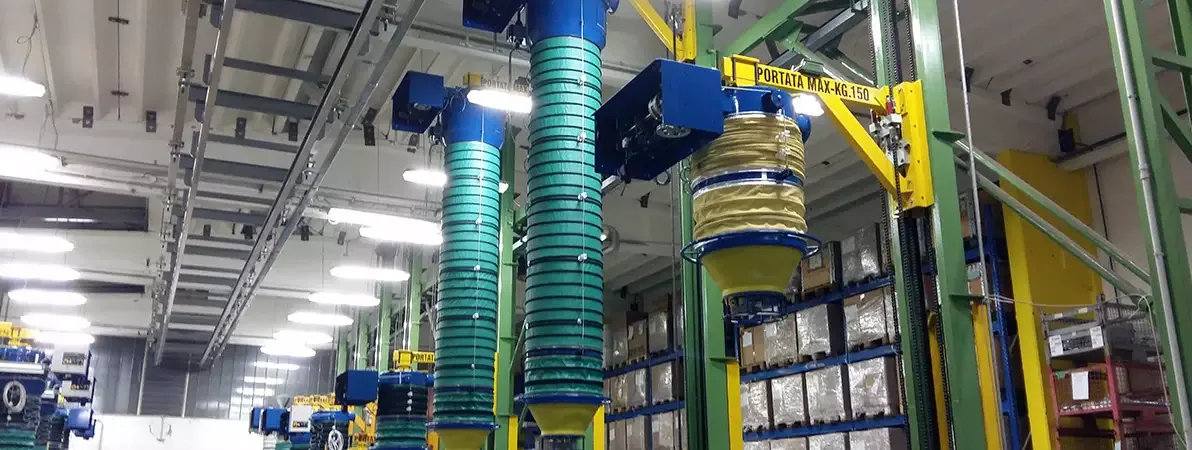
Gallery
Tanker, open truck and ship loading configurations.
Technical overview
Different loading-bellows configurations are available for closed vessels, open vehicles, ships and open storage areas. Dust extraction, level sensing, automatic outlet closing and other accessories can be incorporated according to the material, loading point and operating environment.
What is a Loading Bellows System?
A loading bellows system is designed to guide powders and granular materials from a fixed discharge point into a receiving vehicle, vessel or storage area. During transfer, the telescopic or flexible bellows extends towards the receiving point so that the material has a controlled path from the process equipment to its destination.
One of the main functions of the system is dust control. Dry bulk materials can generate significant airborne dust when they fall from a conveyor, silo or other discharge outlet. The bellows encloses the material stream and helps manage the air displaced during loading, reducing the amount of dust released into the surrounding area.
Depending on the application, dust can be collected through an integrated extraction arrangement or connected to an external filtration system. This makes loading bellows particularly useful at points where powders or granules are transferred from enclosed process equipment into trucks, tankers, ships, containers or open stockpiles.
The correct design depends on the receiving equipment, material characteristics, loading height, dust behaviour and required loading capacity. Closed loading and open loading therefore use different outlet designs and dust-control arrangements.
General Features of Loading Bellows
Loading bellows can be equipped with different features according to the material and the type of loading operation.
A dust-separation or extraction system can be incorporated to collect airborne particles generated during material transfer. The required arrangement depends on the properties of the powder or granular product and on whether the receiving point is open or enclosed.
Filter elements suitable for particular operating conditions can be selected, including configurations intended to deal with moisture or oil-containing environments. Where additional extraction capacity is required, a fan-assisted filter arrangement can also be incorporated.
The lower section of the bellows can use a specially shaped outlet or closing cone to reduce the escape of dust from the loading point. In closed loading applications, the outlet can seal against the receiving connection so that displaced air and dust are managed through the extraction system rather than released around the loading area.
Level sensors can be integrated to detect when the receiving vessel or material pile reaches the required level. This allows the loading cycle or bellows movement to be controlled according to the status of the receiving point.
Bellows Models
Loading bellows are available in different configurations because the requirements of a closed tanker are different from those of an open truck, ship or stockpile.
Closed-volume loading bellows are used for applications such as tankers, enclosed ship holds and closed containers. The flexible outlet is designed to form a controlled connection with the receiving opening. During loading, displaced air and dust can be drawn through the extraction system while the bulk material enters the vessel.
Silo loading bellows are used where dry powders or granular materials must be transferred into a receiving silo or similar enclosed storage system. The aim is to provide a controlled loading path while limiting dust emissions and unnecessary product loss.
Open-environment loading bellows are intended for loading powders and granules into open trucks, ships or storage areas. These systems use an outlet arrangement suitable for an open receiving point, often combined with a flexible dust-retaining skirt and automatic lifting control.
Truck loading bellows are installed beneath bunker outlets, screw conveyors, pneumatic conveying systems or other discharge equipment to transfer dry bulk material into open vehicles. The bellows follows the loading position and helps contain the dust created as the product enters the truck.
Ship loading bellows are used at ports and bulk-handling terminals to transfer powders and granular materials into ships. They can be installed at bunker outlets or downstream of screw conveyors, elevators and pneumatic conveying systems.
Stockpile-loading bellows are designed for controlled transfer into open storage areas and raw-material stockpiles. The bellows reduces the free-fall distance of the product and helps contain dust around the point where the material is deposited.
Loading Bellows Accessories
Loading bellows can be fitted with accessories that adapt the system to the required loading operation and improve dust control, sensing and process integration.
Dust extraction is used to capture the dust generated while material flows through the bellows. The extraction method is selected according to the dust characteristics and the available filtration arrangement.
Housing-mounted dust extraction collects dust directly through the main bellows assembly. A suction fan draws dust-laden air towards the filtration system, while filter-cleaning equipment helps remove collected material from the filter elements.
Side-mounted dust extraction provides a compact extraction arrangement attached to the upper section of the loading bellows. It can be used where the loading point requires local dust collection without a separate remote filter installation.
Where space or process conditions do not allow an integrated collector, independent dust extraction can be connected through a separate air outlet duct. The dust extraction pipework and filtration equipment are then installed separately from the bellows.
Centralised dust extraction allows several loading or dust-generating points within a plant to be connected to a common collection system. Air outlet ducts from the loading equipment are connected to the central extraction network so that dust can be managed away from the individual loading stations.
An automatic closing cone can be installed on bellows used for tankers, silos or other closed receiving vessels. The cone remains closed when the bellows is not positioned for loading, opens when the outlet reaches the receiving connection and closes again when the transfer is completed. This helps restrict dust escape from the outlet.
Sampling devices can be incorporated where material samples must be taken during transfer for inspection or quality control. Manual, mechanical or automatic arrangements may be selected according to the process.
Level sensors are used to detect when material reaches a defined height in the receiving vessel or loading area. Their signal can be used to control the loading sequence and reduce the risk of overfilling or unnecessary product loss.
High-temperature loading bellows are available for processes involving hot powders or granular materials, such as fly ash. The bellows materials and associated components must be selected according to the actual material temperature and operating conditions. No fixed temperature limit should be assumed without checking the specification of the selected model.
ATEX-compatible configurations can be specified for applications involving combustible or potentially explosive dust environments where the installation requires suitably rated equipment. The complete installation must be assessed according to the actual hazardous-area conditions.
Food-compatible loading configurations can also be selected where powders or granular food ingredients are being transferred and suitable contact materials and hygienic construction are required.
Loading Bellows Usage Areas
Loading bellows are used anywhere dry powders or granular products must be transferred from process equipment into vehicles, vessels or storage areas while controlling dust and product loss.
Typical application areas include:
- Pharmaceutical industry
- Food industry
- Textile industry
- Industrial production facilities
- Construction-material operations
- Airports
- Marinas
- Harbours and port facilities
- Warehouses and storage terminals
They are also widely used beneath silos and bunkers, at the outlets of screw conveyors and elevators, and downstream of pneumatic conveying systems. The final configuration should be selected according to the material being handled, the receiving equipment, the type of loading point and the dust-control requirements of the installation.
Loading Bellows Prices
Loading-bellows prices depend on the model, loading arrangement, travel length, outlet configuration and accessories required for the application. A closed tanker-loading system, open-truck bellows and ship or stockpile loading system can differ significantly in construction even though each performs the same basic function of guiding bulk material during transfer.
Dust-extraction equipment, filter arrangements, level sensors, automatic closing devices, high-temperature construction, hazardous-area requirements and other optional components can also affect the final configuration and price.
For this reason, the loading system should first be selected according to the material, required capacity, receiving equipment and operating environment. For current pricing and assistance with selecting a suitable loading bellows, contact the ADNA TECH team with details of the material and loading application.
