

10
Dosing Units
Dosing units are used to introduce controlled quantities of ingredients, additives or other materials into an industrial process. Depending on the required accuracy and the characteristics of the material, dosing can be performed volumetrically or by using a weighing system that continuously monitors the amount being fed.
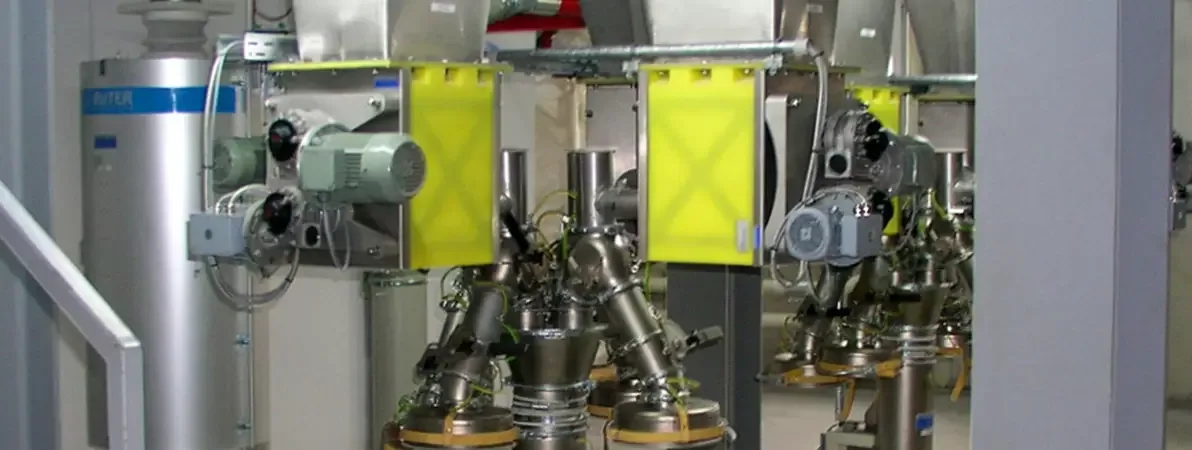
Gallery
Volumetric and loss-in-weight dosing equipment.
Technical overview
For powders and granular products, the correct dosing unit is selected according to factors such as flow behaviour, required feed rate, dosing accuracy and the way the material reacts inside the feeder. The range includes micro-batch feeders for different bulk-solid characteristics as well as loss-in-weight screw feeders for applications requiring controlled gravimetric dosing.
What are Dosing Units?
Dosing units are devices designed to feed a defined quantity of material into a process so that ingredients can be combined in the required proportion. Maintaining the intended ratio is important wherever additives, raw materials or process ingredients must be introduced consistently.
In bulk-solid applications, dosing equipment may handle powders, granules and other particulate materials. The feeder regulates the amount delivered to the next process stage and can therefore be used as part of mixing, formulation, treatment or production systems.
The appropriate unit depends on the material and the required degree of control. A freely flowing granular product does not behave in the same way as a powder that tends to compact or bridge, so different feeder designs are used for different material characteristics.
Types of Dosing Unit
Dosing systems can be divided according to the way the quantity of material is controlled. Two common principles for bulk solids are volumetric dosing and gravimetric, or loss-in-weight, dosing.
Volumetric dosing controls material feed according to the displacement produced by the feeder and its operating speed. When the material characteristics remain reasonably consistent, the screw or feeding mechanism can deliver a controlled volume over a defined period.
Loss-in-weight dosing adds a weighing system to the feeding process. The reduction in the weight of the feeder and its contents is monitored while material is discharged, allowing the control system to regulate the feed according to the required dosing rate.
Dosing technology is also used more broadly in processes involving liquid or solid chemicals. The suitable equipment therefore depends on the physical form of the material, the required quantity, the dosing method and the level of process control required.
Models of Dosing Units
Different dosing-unit models are required because powders and granular materials can have very different flow characteristics. Equipment selection should take account of whether the material flows freely, tends to compact, is difficult to discharge or requires especially accurate feed control.
The product range includes MBF and MBW micro-batch feeders as well as DCC loss-in-weight screw feeders. Each series is intended for a different material behaviour or dosing requirement.
MBF Micro Dosing Units
MBF micro-batch feeders are particularly suitable for powders and granular materials that flow poorly or have a tendency to clog. Their modular design allows the feeding arrangement to be adapted to different application requirements.
The feeder is intended to maintain controlled material movement even where the bulk solid does not discharge easily under gravity. Easy access to the feeding components supports cleaning and routine maintenance, which is particularly useful where materials or formulations are changed.
Configurations suitable for food-related applications can also be selected where the required construction and material-contact conditions are specified for the process.
MBW Micro Dosing Units
MBW micro-batch feeders are intended mainly for free-flowing or moderately flowing materials that do not have a strong tendency to compact under pressure.
Typical application areas include animal-feed production, plastics processing, and drinking-water or wastewater treatment processes where solid additives or similar materials must be introduced in controlled quantities.
The design provides access for cleaning and maintenance while supporting regular feeding of materials whose flow behaviour is more stable than the difficult-flowing products generally associated with MBF units.
Loss Weight Screw Feedres
DCC loss-in-weight screw feeders are designed for applications where accurate gravimetric dosing is required. The system combines screw feeding with weight measurement so that the quantity of material leaving the feeder can be monitored during operation.
As material is discharged, the reduction in weight is measured and used to control the feed rate. This allows the dosing process to respond to the actual amount of product being delivered rather than relying only on screw speed or theoretical volume.
DCC feeders can be used for powders and granular materials where controlled ratio adjustment and repeatable dosing are important. Suitable configurations can also be selected for food-related applications when the required material-contact and process conditions are specified.
What Are Dosing Units Used For?
Dosing units are used wherever one material must be added to another in a controlled quantity. They can introduce ingredients, additives or process materials according to a defined formulation or operating requirement.
In bulk-material systems, this may involve feeding powders or granules into mixers, processing equipment, treatment systems or other production stages. The purpose is to control how much material enters the process and, where required, maintain the desired proportion between different components.
Dosing technology in general is also used for chemical additions such as pH regulators, corrosion inhibitors and scale-control chemicals. The type of dosing equipment must always match the physical form of the material; the MBF, MBW and DCC equipment represented on this page is focused on solid bulk-material feeding and dosing.
How Do Dosing Units Work?
For powder and granular materials, dosing units commonly use a screw or spiral feeding mechanism to move a controlled quantity of product towards the discharge point.
In volumetric operation, the amount being delivered is regulated by factors such as feeder geometry and operating speed. A variator or frequency converter can be used to adjust the speed and therefore control the material flow.
A loss-in-weight system also incorporates weighing equipment. The control system monitors the reduction in mass while material is being discharged and adjusts the feeder operation according to the required dosing rate.
Automatic control can therefore be incorporated into both the feeding and weighing process, depending on the selected unit and the level of accuracy required by the application.
Where are Dosing Units Used?
Dosing technology is used across industrial and treatment processes where materials must be added in controlled quantities. The source applications include:
- Disinfection systems
- Flocculation systems
- Chlorine dosing systems
- Steam boilers
- Water and waste water systems
- Swimming pools
- Cooling towers
- Measuring and control devices
- Chemical storage tanks
The exact dosing equipment used in these applications depends on whether the substance being added is liquid or solid. For MBF, MBW and DCC feeders, selection should be based specifically on the powder or granular material, its flow characteristics and the required dosing performance.
Dosing Units Prices
Dosing-unit prices vary according to the feeder type, size, required capacity, dosing principle, construction and control equipment. A simple volumetric micro-batch feeder and a gravimetric loss-in-weight system have different measurement and control requirements, so their configurations and costs cannot be compared only by physical size.
Material characteristics can also influence the required design. Difficult-flowing powders may require a different feeding arrangement from free-flowing granules, while applications requiring higher dosing accuracy may need weighing equipment and more advanced control.
Additional requirements such as food-compatible construction, control components, frequency converters and application-specific accessories can also affect the final specification.
For current pricing and assistance with selecting a suitable dosing unit, contact the ADNA TECH team with information about the material, required dosing rate, process conditions and the level of accuracy required.
