

07
Filters
Industrial filter units are used to control airborne dust generated during the storage, conveying, filling and processing of powders and other bulk materials. Installed on silos, bins, hoppers, tanks and related material-handling equipment, these systems allow displaced air to pass through filter media while retaining dust particles that would otherwise escape into the surrounding environment.
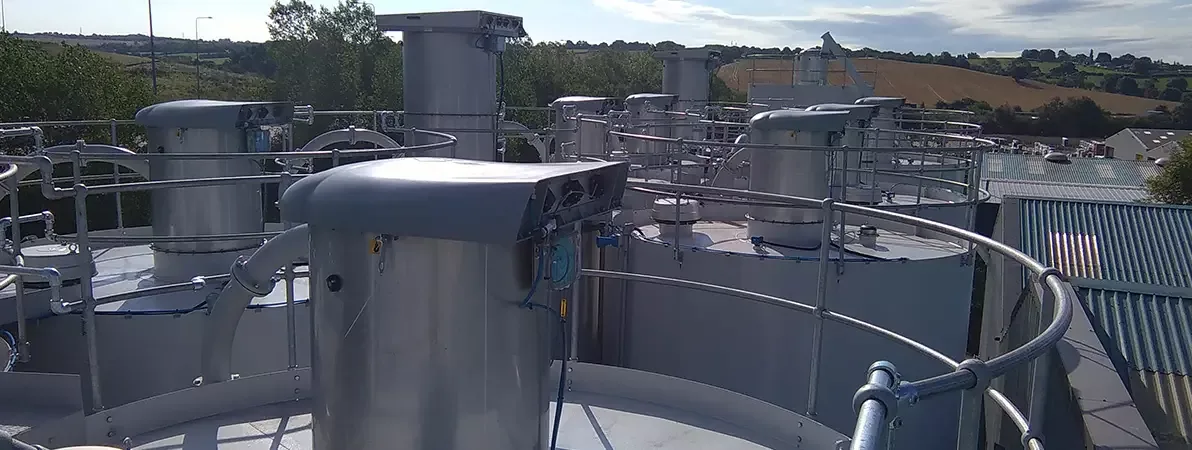
Gallery
Silo venting and dust collection units across round, polygonal and hopper-mounted formats.
Technical overview
Different filter configurations are available for different process layouts and dust loads. Silo venting filters, round dust collectors, polygonal dust collectors and hopper-mounted filter systems can be selected according to the equipment, material and operating conditions of the installation.
What Are Filter Units Used For?
Filter units are designed to separate dust from the air generated or displaced during industrial processes. When powders and bulk solids are conveyed, transferred or introduced into storage equipment, air movement can carry fine particles away from the material stream. A correctly selected filter allows this air to be vented or extracted while capturing the suspended dust.
This function is particularly important during pneumatic filling of silos and similar vessels. As material enters the silo, the incoming product displaces air from inside the vessel. Without suitable filtration, that air can carry cement, mineral powder, flour, chemical powder or other fine material into the surrounding workplace. A silo venting filter provides a controlled path for the displaced air while retaining the dust.
Filter units are also used on bunkers, tanks, hoppers, conveyors and other process equipment where dust can be released during loading, unloading or material transfer. Depending on the application, the filter may be mounted directly on the equipment or connected as part of a wider dust-extraction arrangement.
Pulse-cleaning systems help maintain the condition of the filter elements by periodically removing accumulated dust from their surfaces. Compressed-air pulses dislodge the collected material so that the filter can continue to pass air without excessive dust build-up. The cleaning principle and filter configuration must be matched to the application, dust characteristics and required airflow.
By controlling dust at the point where it is generated, industrial filters support cleaner material-handling operations and help reduce uncontrolled dust emissions around production and storage equipment.
Filter Unit Types
Different types of filter units are used according to the equipment being ventilated and the amount and characteristics of the dust being handled.
Silo venting filters are mounted directly on top of silos and are designed to filter the air displaced during pneumatic filling. These systems are commonly used with powders such as cement and similar dry bulk materials where significant dust can be generated as the silo is filled.
Round dust collectors provide a cylindrical filter arrangement that can be integrated with silos and other process equipment. Depending on the model and installation, they can be used where a compact filtration system is required for venting or dust extraction.
Polygonal dust collectors use a different housing geometry and are suitable for industrial dust-collection applications where the filter must be integrated with production or material-handling equipment. Their configuration allows the filtration system to be adapted to different installation layouts.
Hopper-mounted filter systems are designed for applications where dust is generated around hoppers or material receiving points. By positioning filtration close to the source of the dust, these systems can capture particles during loading, transfer and handling operations.
Jet-pulse cleaning can be incorporated into different filter designs. The cleaning cycle uses compressed air to remove dust from the filter elements, helping the filtration surface remain available during operation.
Features and Usage Areas of Filter Units
Industrial filter units are used across a wide range of operations involving powders, granules and dusty bulk materials. The most suitable filter is determined by the process equipment rather than by the industry name alone. A silo venting filter, for example, may be required anywhere a silo is pneumatically filled regardless of whether the stored product is cement, food material, mineral powder or another dry bulk solid.
Typical applications include food production and storage facilities, cement and construction-material plants, plastics processing, chemical production, mineral handling and installations dealing with flour, grain, stone dust, gypsum, lime and similar materials.
Filters can be installed on silo tops, hoppers, tanks and material-transfer equipment, as well as at points where powders are discharged or introduced into conveying systems. Direct installation close to the dust source helps reduce the distance that contaminated air must travel before filtration.
The filtration system normally combines filter elements, a housing, an air-cleaning mechanism and the components needed to connect the unit to the process equipment. Cartridge or other filter-element designs may be used depending on the product series and the application. Replaceable filter elements also allow worn or contaminated components to be serviced without replacing the complete filter unit.
Selection should take account of the required airflow, dust concentration, particle characteristics, operating temperature, available installation space and the method used to clean the filter elements. The equipment must also be suitable for the material being handled and for the filling or conveying process to which it is connected.
For silo applications, effective ventilation is especially important during filling. The filter must allow sufficient air to leave the vessel while retaining the transported powder. Correct sizing and maintenance therefore contribute directly to stable silo filling and reliable dust control.
Filter Units Prices
Filter-unit prices vary according to the type of filter, its size, filtration area, construction, cleaning system and the accessories required for the installation. A silo-top filter, round dust collector and larger industrial dust-collection unit may have very different configurations even when they perform the same general function of separating dust from air.
The application also affects the final equipment selection. Factors such as the material being filtered, required airflow, number and type of filter elements, compressed-air cleaning equipment, spare parts and the machinery with which the filter will operate can all influence the required specification and therefore the price.
For this reason, filter equipment should be selected according to its technical suitability and operating requirements rather than price alone. For current pricing and assistance with choosing a filter unit for a silo, hopper, tank or other bulk-material handling application, contact the ADNA TECH team with details of the material and process.
