

05
Clips and Valves
Clips and valves are used in industrial systems to control, stop, regulate or redirect the movement of materials through a process. Depending on the valve type and application, they can be used with liquids and gases as well as powders, granules and other bulk solids.
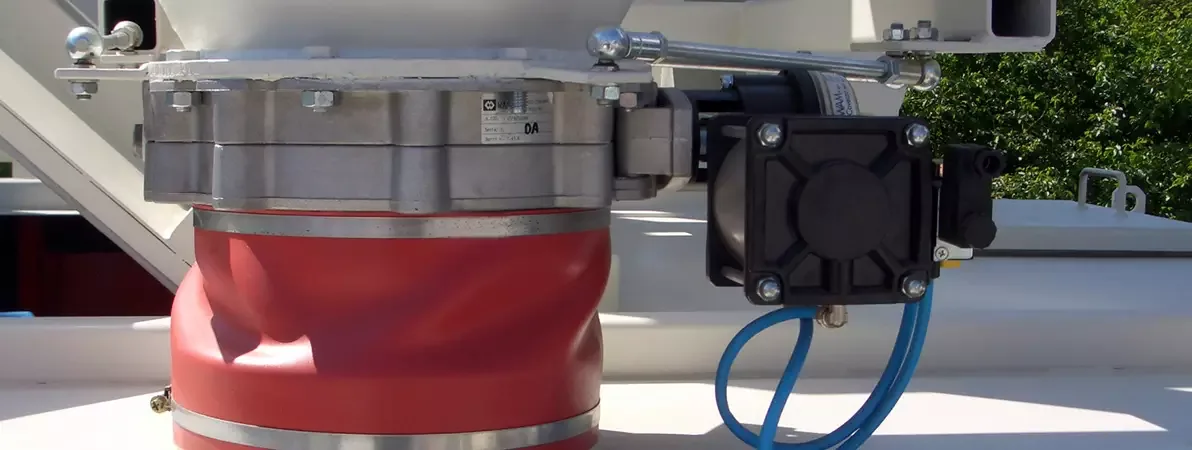
Gallery
Shut-off, metering, diverting and relief devices with their actuators.
Technical overview
These flow-control components are widely used in gravity-fed and pneumatic conveying systems, silo discharge arrangements, loading and unloading lines and many other industrial processes where material flow must be managed reliably.
What are Clips and Valve? What are they used for?
Clips and valves are flow-control devices used during loading, transfer, processing and discharge operations. Their primary purpose is to control the passage of material through a pipe, chute, silo outlet or process connection.
In bulk-material handling applications, valves may be required to stop the flow completely, regulate the amount of material passing through the system, or redirect the product towards a different process line. They are particularly important in gravity conveying and pneumatic conveying systems, where controlled opening and closing are necessary for reliable operation.
Depending on the valve design and the material being handled, these components can perform several functions. They can isolate sections of a process, prevent unwanted material movement, help control discharge rates and direct product between different destinations.
Suitable valves can also help reduce material loss and support cleaner operation by limiting uncontrolled discharge. Certain designs provide sealing for liquids or gases, while others are specifically intended for powders, granules or abrasive bulk materials. Some valve designs also incorporate replaceable wear components so that parts exposed to the product can be serviced without replacing the complete unit.
The correct valve should always be selected according to the material characteristics, pressure conditions, operating temperature, required flow rate and the way the valve will be integrated into the process.
What Types of Clips and Valves Are There?
Different valve designs are used because industrial processes do not all require the same type of flow control. The most suitable solution depends on the material being handled, whether the flow must be isolated or regulated, the operating pressure and temperature, and the configuration of the surrounding equipment.
The Clips and Valves range includes several valve types intended for different conveying, storage and processing duties.
Butterfly Valves
Butterfly valves use a rotating disc to open, restrict or close the flow path. Their compact construction makes them suitable for many industrial applications, particularly beneath silos, hoppers and other equipment used for handling powders and granular materials.
When fully open, the disc is positioned to allow material to pass through the valve body. Rotating the disc towards the closed position restricts the flow until the passage is shut. Butterfly valves are widely used where a simple and compact shut-off solution is required.
Slide Valves
Slide valves control material flow by moving a blade or plate across the opening of the valve. The sliding element can open the passage to allow material through or close it to interrupt the flow.
These valves are commonly used in bulk-solids handling systems where powders or granules must be isolated from downstream equipment. Depending on the actuator and application, the valve can be operated manually, pneumatically or by another suitable drive arrangement.
Ball Segment Valves
Ball segment valves use a shaped rotating segment to open or close the flow passage. Their geometry allows a relatively unobstructed flow path when the valve is open, making the design suitable for applications where material must pass through the valve with limited restriction.
Selection depends on the medium, pressure, temperature and required control function of the system.
Pinch Valves
Pinch valves control flow by compressing a flexible internal sleeve. When the sleeve is open, the material passes through the valve; when it is compressed, the passage is closed.
This operating principle makes pinch valves useful for powders, granules and other materials where the product should primarily come into contact with the flexible sleeve rather than the main valve body. They can also be used as shut-off devices in pneumatic conveying and silo-filling lines when the valve specification is suitable for the operating pressure.
Double Dump Valves
Double dump valves are used for controlled discharge of bulk solids, particularly where material must pass between two sections of a process while limiting uncontrolled air movement.
They can be applied to powders, granules and larger particles, including applications involving abrasive or elevated-temperature products when the valve construction is selected accordingly. Typical installation areas include silos, bunkers, storage systems and other bulk-material discharge points.
Pressure Relief Valves
Pressure relief valves are safety components designed to react when pressure inside a vessel or process system moves outside its intended operating range.
In silo applications, pressure relief equipment can help protect the vessel from abnormal overpressure or vacuum conditions that may develop during filling or discharge. Correct sizing, installation and maintenance are essential because the valve is part of the pressure-protection system.
Diverter Valves
Diverter valves are used when a material stream needs to be directed towards one of two or more process routes.
They are commonly installed in systems handling powders, granules and other bulk solids where a single conveying line must feed different destinations. The internal diverter changes the material path while helping maintain controlled transfer through the process.
Actuator
Actuators provide the movement required to open, close or position a valve. Depending on the system, actuation may be pneumatic, electric or manual.
The actuator must be matched to the valve type, required operating torque, switching frequency and process conditions. Correct actuator selection allows the valve to respond reliably to manual commands or to signals from an automated control system.
